
510 Battery Chargers & Accessories: What You Need and What You Don’t (2026)

The Right Charger Makes a Bigger Difference Than You Think
Using the wrong charger with your cart battery is the number one cause of premature battery death. It’s also one of the easiest problems to avoid — if you know what to look for.
Most people don’t think much about their charger until something goes wrong: the battery stops holding a charge after a few months, it takes forever to charge, or it won’t charge at all. Nine times out of ten, the charger is the culprit — either the wrong type, the wrong voltage, a cheap cable, or a worn-out connection.
This guide covers every type of 510 battery charger, which one your battery needs, accessories that are actually worth buying, and the charging mistakes that kill batteries early. If you’ve already read our complete charging guide, this page focuses specifically on the hardware — the chargers and accessories themselves.
🛒 QUICK LINKS — Shop Chargers & Accessories:
→ Universal eGo USB Charger Cable — Standard screw-on 510 charger
→ Universal Wireless eGo Charger — Cordless screw-on charger
→ Cartisan Universal eGo Charger — Cartisan branded 510 charger
→ Cartisan USB-to-USB-C Cable (25-pack) — Bulk USB-C cables for modern batteries
→ Yocan USB-to-USB-C Cable — Replacement USB-C cable for Yocan batteries
Know Your Charger Type
There are three main types of chargers used with 510 cart batteries. Which one you need depends entirely on which battery you have.
1. USB-C Charging (Modern Standard)
What it is: A USB-C port built into the battery. You plug in a standard USB-C cable (the same kind that charges most modern phones) and connect it to any USB power source — wall adapter, laptop, power bank, car charger.
Which batteries use it: Most batteries made in 2023 or later. This includes popular models like the Randy’s Inspo Max, Vessel Compass Rise, CCELL Fino, and most Ooze, Yocan, Pulsar, and Cartisan batteries released recently.
Why it’s the best: USB-C charges faster than older standards, delivers more consistent power, and uses the same cable you already carry for your phone. It also supports roughly 10,000 plug cycles before wear becomes an issue, compared to around 5,000 for Micro-USB. If you’re buying a new battery, USB-C should be a baseline requirement.
Cables we carry:
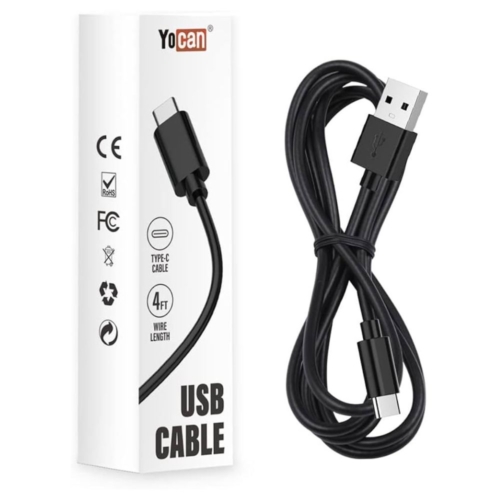
Yocan USB-to-USB-C Cable — A standard USB-A to USB-C cable that works with any USB-C battery (not just Yocan). Good replacement if you’ve lost your original cable or want a spare.
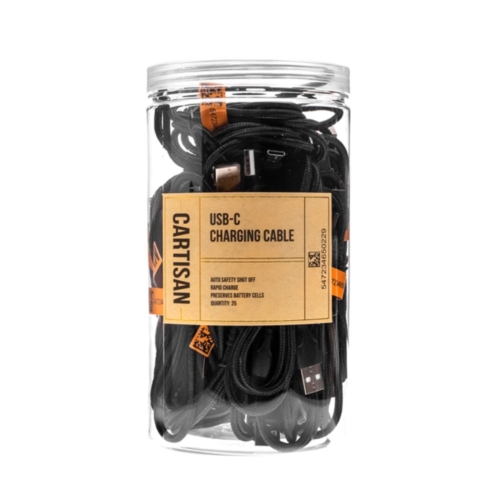
Cartisan USB-to-USB-C Cable (25-pack jar) — Bulk pack of 25 USB-C cables. Perfect for smoke shops, dispensaries, or anyone who wants cables stashed everywhere — car, nightstand, desk, bag. At bulk pricing, these come out to well under a dollar per cable.
2. eGo Screw-On Charger (Classic Standard)
What it is: A small round disc with 510 threading on one side and a USB-A plug on the other. You unscrew your cartridge, screw the charger onto the battery’s 510 threading, then plug the USB end into a power source.
Which batteries use it: Older pen-style batteries, eGo-style batteries, and budget batteries that don’t have a built-in charging port. This includes the eGo-C Twist, eGo-T batteries, and similar classic pen designs.
How to use it: Unscrew your cartridge first. Screw the charger onto the battery’s 510 thread (gently — don’t overtighten). Plug the USB end into a standard 5V USB power source. The LED on the charger or battery will indicate charging status (usually red while charging, green when full). Charge time is typically 60–90 minutes for 650–1300mAh batteries.
Important: Always plug the charger into the power source before screwing it onto the battery. Attaching the battery to an unpowered charger can sometimes cause connection issues.
Chargers we carry:
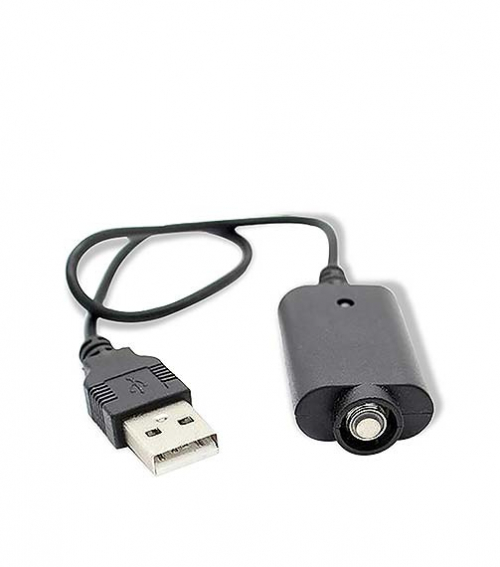
Universal eGo USB Charger Cable — The standard screw-on 510 charger with a USB cable attached. Works with virtually all eGo-style pen batteries. This is what most pen-style batteries come with in the box — if you’ve lost yours or it stopped working, this is the direct replacement.

Universal Wireless eGo Charger — Same screw-on 510 connection, but without a cable. It’s a compact USB-A plug with the 510 threading built directly into it. Screw your battery on, plug the whole thing into a USB port, and you’re charging. No dangling cable. Great for travel or charging from a laptop where you don’t want a cable hanging off.
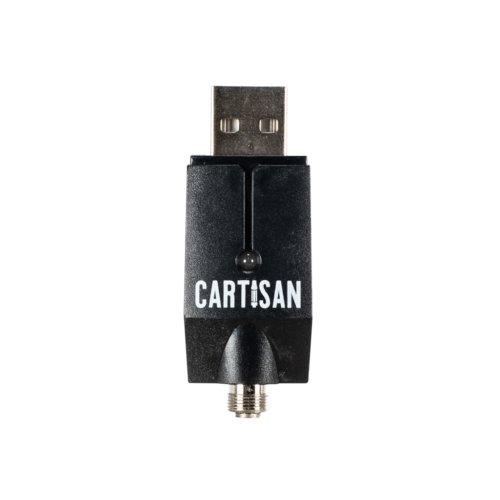
Cartisan Universal eGo Charger — Cartisan’s version of the wireless eGo charger. Same screw-on principle, compact form factor. Works with Cartisan eGo Spinner batteries and any other eGo-threaded battery.
3. Magnetic / Dock Charging
What it is: Some premium batteries charge through proprietary magnetic connections or docking stations rather than standard ports or screw-on chargers.
Which batteries use it: The CCELL Fino mini battery charges magnetically when docked in its power dock. The Vessel Slate Wood uses a magnetic USB charger specific to Vessel products. The Airis Cube supports wireless Qi charging in addition to USB-C.
What you need to know: If your battery uses proprietary magnetic charging, keep the original charger safe — replacements can be harder to find and more expensive than standard cables. For batteries with Qi wireless charging (like the Airis Cube), any standard Qi-compatible wireless charging pad works.
Which Charger Does Your Battery Need?
| Your Battery Type | Charger Needed | Our Recommendation |
|---|---|---|
| Modern battery with USB-C port | Any USB-C cable + 5V power source | Yocan USB-C Cable |
| Pen-style eGo battery (no port) | eGo screw-on 510 charger | Universal eGo USB Cable |
| eGo battery (want cordless) | Wireless eGo charger (USB plug) | Universal Wireless eGo Charger |
| Cartisan eGo Spinner battery | eGo screw-on charger | Cartisan eGo Charger |
| Battery with Qi wireless charging | Any Qi wireless pad + USB-C cable | Any brand Qi pad works |
| Vessel Slate Wood | Vessel magnetic USB charger | Use original (proprietary) |
| CCELL Fino mini battery | CCELL Fino dock (magnetic) | Use included dock |
| Smyle Mini Plug | Built-in USB-C cable (or standard USB-C) | No charger needed — built in |
Shopping for a new battery instead? Most of our 510 batteries charge by USB-C.
Charging Safety: The Rules That Matter
Lithium-ion batteries are safe when treated properly and dangerous when abused. These aren’t suggestions — they’re the habits that prevent fires, battery damage, and premature failure.
Always use a 5V power source. This is the most important rule. Your cart battery expects 5V input. Standard USB ports on laptops, basic wall adapters, and car USB ports all output 5V. Do NOT use fast chargers (QuickCharge, USB-PD, 18W+ iPhone chargers) — these output 9V–20V and will damage or destroy your battery. Check the label on your wall adapter: it should say “Output: 5V.”
Don’t leave batteries charging unattended overnight. Modern batteries have overcharge protection that prevents them from exploding or catching fire. However, sitting at 100% charge for hours does accelerate long-term degradation of the lithium-ion cells. Charge it, unplug it, and you’ll get more months out of the battery.
Charge on a hard, flat surface. Not on a bed, couch, pillow, or anything that traps heat. Lithium-ion batteries generate warmth while charging — on a hard surface, that heat dissipates normally. On a soft surface, heat gets trapped and can cause overheating.
Slight warmth is normal. Hot is not. If your battery or charger gets uncomfortably hot to touch during charging, unplug it immediately. Excessive heat means something is wrong — wrong charger voltage, damaged battery, or faulty cable.
Replace cheap or damaged cables. A frayed cable, a bent connector, or a dollar-store cable with poor shielding can cause slow charging, inconsistent power delivery, or worse. Using quality cables from reputable brands is a small investment that protects your battery.
For eGo screw-on chargers: Plug the charger into the power source first, then screw the battery on. Don’t overtighten — hand-snug is enough. And always remove your cartridge before attaching the charger.
Accessories Worth Buying
Beyond chargers, a few small accessories can meaningfully improve your cart battery experience.
Extra USB-C cables ($1–3 each). Keep one in your car, one at your desk, one in your travel bag, and one on your nightstand. Running out of charge because you can’t find a cable is an avoidable problem. The Cartisan 25-pack is the most cost-effective way to stock up.
Magnetic adapters ($2–5 each). If your battery uses magnetic drop-in connections, keeping spare adapters on each of your cartridges saves time and eliminates the frustration of hunting for an adapter when you want to swap carts. See our magnetic adapter guide for details.
A 510 thread extender ($2). Screws onto your battery and acts as a sacrificial piece between the cart and the battery’s built-in threading. Protects against oil buildup and thread wear. Costs $2 and can save your battery. Details in our thread extender guide.
A carrying case or pouch. Especially for travel. Keeps your battery, cartridges, charger cable, and adapters organized in one place. Prevents scratches, drops, and accidental activation. Even a small zippered glasses case works.
Isopropyl alcohol + cotton swabs. Not a vape-specific accessory, but the single most important maintenance tool. A quick swab of the 510 connection and charging port once a week prevents the gunk buildup that causes connection issues. Full cleaning routine in our maintenance guide.
Accessories You Don’t Need
The vape accessories market is full of products that sound useful but aren’t worth the money for most cart battery users.
Lanyards and neck straps — Unless you specifically bought a battery designed for lanyard use (like the Lookah Cat which has lanyard holes), aftermarket lanyards for cart batteries are awkward and don’t work well. Your pocket is fine.
“Fast charge” cables marketed for vapes — Your battery charges at the speed the battery’s internal circuitry allows, not at whatever speed the cable claims. A standard USB-C cable delivers the same charging speed as a “premium fast charge vape cable” that costs three times as much.
Battery “revival” or “reconditioning” products — If your battery won’t hold a charge, it’s at the end of its lifespan. No product will bring it back. Replace it. A quality battery costs $15–25 and will last 1–2 years with proper care.
Common Charger Questions
Can I use my phone’s USB-C cable to charge my battery?
Yes — any standard USB-C cable works with any USB-C battery. The cable doesn’t care what’s on either end. Just make sure you’re plugging it into a 5V power source, not a fast charger.
My eGo charger stopped working. How do I know if it’s the charger or the battery?
Try a different eGo charger if you have one. If the battery charges with a different charger, your original charger is dead — replace it for $2. If it still won’t charge with a new charger, the battery may be at end of life. Before giving up, clean both the battery’s 510 threading and the charger’s threading with rubbing alcohol and try again.
Why does my battery take so long to charge?
Common causes: you’re charging from a low-power USB port (computer USB ports output less power than wall adapters), using a worn or damaged cable, the battery is very old and degraded, or the ambient temperature is very cold or hot. Try a different cable and a wall adapter rated at 5V/1A or 5V/2A.
Is it safe to charge my battery in the car?
Yes, using a standard car USB port (which outputs 5V). Don’t leave the battery in a hot car after charging — remove it when you get out. And don’t use a car fast-charger port if your car has one.
How long do eGo chargers last?
They’re simple devices with no moving parts, so they can last a year or more. But the 510 threading can wear over time, especially with frequent use. If your charger starts making intermittent connections (charges sometimes but not others), the threading is probably worn. Replace it — they’re $2.
Should I upgrade from an eGo battery to a USB-C battery?
If you’re still using an eGo-style battery with a screw-on charger, upgrading to a modern USB-C battery is one of the best improvements you can make. USB-C charges faster, the ports are more durable, and you use the same cable as your phone. Plus, modern batteries have better voltage control, preheat functions, and safety features. Check our cart battery beginner’s guide or best cart batteries 2026 for recommendations.
🎯 Shop Chargers & Accessories
510 Battery Chargers & Cables
Keep your battery charged and ready. Free shipping on orders over $40:
Universal eGo USB Charger Cable — Standard screw-on 510 charger with cable
Universal Wireless eGo Charger — Compact cordless screw-on charger
Cartisan Universal eGo Charger — Cartisan branded wireless 510 charger
Yocan USB-to-USB-C Cable — Replacement USB-C cable
Cartisan USB-C Cable 25-Pack — Bulk cables for shops or personal stash
📚 CONTINUE LEARNING:
→ How to Charge a 510 Battery: Complete Safety Guide
→ 510 Magnetic Adapters & Thread Extenders Guide
→ 510 Battery Maintenance & Care Guide
→ Complete Guide to Cart Batteries for Beginners
→ Best Cart Batteries 2026: Full Buyer’s Guide
→ Traveling with a Cart Battery: Complete Guide
A note on terminology: “Cart battery” and “510 thread battery” mean the same thing — one’s the everyday term, the other’s the technical name. Learn more →
These products are for adults 21+ only. Follow all local and state laws regarding cannabis and vaping products. Use responsibly.
Last Updated: March 2026

Written by Marc Pitts
Marc is the CEO of Discount Vape Pen and has spent over 11 years in the vape industry. He began his career owning and operating brick-and-mortar vape shops, giving him hands-on experience with both products and customer needs. A Kean University graduate from Westfield, NJ, Marc combines retail expertise with a deep understanding of the evolving vaping landscape.
Outside of work, Marc loves cooking Italian food, swimming, playing tennis, and attending Broadway shows — a true theater kid at heart. Meet all our Discount Vape Pen Authors here.