
Cart Battery Buying Guide: What to Look For Before You Buy

There are dozens of cart batteries on the market, and at first glance, many of them look identical. Same shape, similar price, similar features listed on the box. So how do you actually tell which one is worth your money — and which ones to avoid?
This guide walks through every feature and spec you’ll encounter while shopping, explains what each one actually means for your day-to-day experience, and tells you which ones genuinely matter versus which ones are just marketing fluff. By the end, you’ll know exactly what to look for, what to ignore, and what red flags to watch out for.
If you’re brand new and don’t know what a cart battery is yet, start with our Complete Guide to Cart Batteries for Beginners first, then come back here when you’re ready to shop.
Battery Capacity (mAh): The Single Most Important Spec
If you only pay attention to one number on the product listing, make it this one.
Battery capacity is measured in milliampere hours (mAh). It tells you how much charge the battery holds — and therefore how long it lasts between charges. A higher mAh number means more time between plug-ins.
What the Numbers Mean in Practice
280–350mAh: The smallest batteries available. These are ultra-slim pen designs built for portability above all else. They’ll last a light user about a day, but heavy users will be charging twice daily. Best for people who value pocket size over everything.
400–500mAh: A step up that adds meaningful battery life without much extra bulk. Good for moderate users who want something compact but don’t want to worry about running out mid-day.
650mAh: The sweet spot for most people. Enough power for a full day of moderate use, still small enough to be portable, and the most common capacity across quality batteries. If you’re not sure what size to get, start here.
900–1100mAh: All-day power for heavy users, or multi-day power for moderate users. These are typically box-style batteries — a bit bulkier, but you’ll rarely think about charging. Worth it if you hate carrying a cable.
1200mAh+: Maximum capacity. You’ll go multiple days between charges, but the battery will be noticeably larger. Best for home use or heavy users who don’t mind the size trade-off.
What to Choose
For most people buying their first or second battery, 500–650mAh hits the right balance. It’s enough for real-world daily use without being bulky or expensive. You can always upgrade to a higher-capacity battery later if you find yourself charging too often.
For a deeper breakdown with real-world estimates by usage level, see our mAh size guide.
Variable Voltage vs. Fixed Voltage
This determines how much control you have over the heat and intensity of your hits.
Fixed Voltage
Fixed voltage batteries output one preset voltage (usually around 3.7V). You can’t adjust it. Press the button, get the same heat every time.
Who it’s for: People who want zero decisions. Screw on a cart, hit it, done. No settings to fiddle with, no learning curve.
The downside: 3.7V is a middle-ground setting that works okay with most oils but isn’t ideal for any of them. It’s too hot for delicate live resin (burns terpenes) and not quite hot enough for the thickest distillates (weak vapor). You’re stuck with “good enough.”
Variable Voltage
Variable voltage batteries let you choose from a range of settings — typically 2.0V to 4.2V, with either preset levels (3–5 settings) or precise adjustment (0.1V increments on screen-equipped models).
Who it’s for: Anyone who uses different oil types, wants to optimize flavor vs. cloud production, or just likes having control. This is the majority of experienced users.
Why it matters: Different oils vaporize best at different temperatures. Live resin shines at 2.2–2.8V. Standard distillate is best at 2.8–3.4V. Thick concentrates may need 3.4V+. Variable voltage lets you match your setting to your oil for the best flavor, smoothest hits, and most efficient oil use.
The Verdict
Variable voltage is worth the small price premium (usually $3–5 more). Even if you start by leaving it on one setting, you’ll appreciate the flexibility as you try different cartridges. For a complete breakdown of which voltage works best with which oil type, see our voltage settings guide.
Activation Type: Button vs. Auto-Draw
This is about how you fire the battery — and it’s more of a personal preference than a quality indicator.
Button-Activated
Press and hold a button while you inhale. The battery fires only when you’re pressing.
Advantages: More features available (preheat, voltage cycling, lock/unlock), no accidental firing in your pocket, and you control exactly when heating starts and stops.
Disadvantages: Slightly more complex for absolute beginners. Requires learning the click sequences (5 clicks on/off, 2 clicks preheat, 3 clicks voltage). See our unlock guide and how to use a cart battery if these feel intimidating — they’re simpler than they sound.
Auto-Draw (Inhale-Activated)
Just inhale from the mouthpiece and the battery fires automatically. No buttons.
Advantages: The simplest possible experience. Nothing to learn, nothing to press. Feels natural — like drinking through a straw.
Disadvantages: Usually no preheat function (no button to double-click), can occasionally activate from wind or pocket pressure, and fewer features overall.
Dual-Mode Batteries
Some batteries offer both auto-draw and button activation. This gives you the convenience of auto-draw for everyday use with the option to switch to button mode when you want preheat or more precise control. If you can’t decide between the two, a dual-mode battery eliminates the choice.
For a detailed comparison with pros and cons of each, see our button vs. auto-draw guide.
Preheat Function
Preheat runs a brief, low-voltage warming cycle (usually 1.8–2.0V for 10–15 seconds) that gently heats your oil before you take a hit. It prevents clogs, improves flow in thick oils, and makes the first hit smoother — especially in cold weather.
Do You Need It?
Yes, if you: Use thick oils (live resin, Delta-8, rosin, heavy distillate), live in a cold climate, or frequently deal with clogged carts.
Nice to have if you: Use standard-thickness distillate or switch between multiple oil types.
Not essential if you: Only use thin CBD oils or nicotine salt cartridges in warm environments.
Most batteries in the $15+ range include preheat. It’s a genuinely useful feature that costs you nothing extra on most models. For a deep dive into how it works and when to use it, see our preheat function guide.
Charging Type

How your battery charges affects convenience, speed, and long-term usability. There are three types you’ll encounter:
USB-C (Recommended)
The modern standard. USB-C charges faster than older connection types, uses a reversible plug (no fumbling with orientation), and is the same cable most phones and devices use. If you’re buying a new battery in 2026, this should be your default choice.
Micro-USB
The previous standard. Still works fine, just charges slower and uses an older connector that’s becoming less common. You’ll find Micro-USB on older models and some budget batteries. Not a dealbreaker, but USB-C is better in every way.
eGo Thread Charger
A small disc that screws onto the battery’s 510 threading. This is the oldest charging method, found on slim pen batteries that don’t have a built-in USB port. eGo chargers work, but they’re the slowest option and are easy to lose since they’re small and proprietary. If your battery uses one and you lose it, replacements are inexpensive — but you can’t substitute a random USB cable.
The Verdict
Choose USB-C whenever possible. For a complete guide to charging methods, timing, and safety, see our charging safety guide and charging time guide.
Cart Compatibility: Standard vs. Large Carts
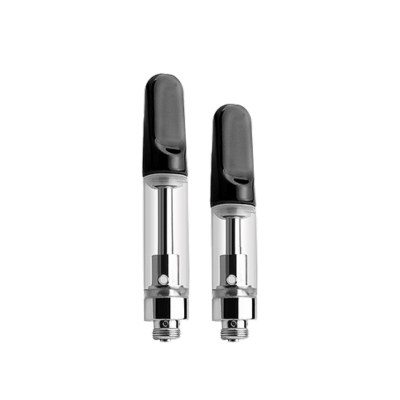
Most cart batteries work with standard 0.5mL and 1.0mL cartridges without any issues. But if you use larger carts (2G, 3G, or bigger), compatibility becomes something you need to check.
What Makes Large Carts Different
Larger cartridges are physically wider (up to 14mm diameter vs. 10–11mm for standard carts) and taller. Some batteries have openings that are too narrow or 510 connections that sit too deep to accommodate them. If you screw on a 2G cart and it doesn’t sit flush, wobbles, or won’t make contact with the battery’s connection pin, the battery wasn’t designed for that size.
What to Look For
If you use or plan to use 2G+ carts, look for batteries that specifically state “2G compatible,” “fits large carts,” or list a maximum cart diameter of 14mm+. Many concealed/box-style batteries are designed with adjustable chambers or wider openings that accommodate larger cartridges.
Our 2G cart battery collection includes only batteries verified to work with large cartridges.
Display: Screen vs. LED vs. None
Batteries communicate their status through different types of indicators. Here’s what each gives you:
OLED/LCD Screen
The most informative option. Screen-equipped batteries display exact battery percentage, current voltage setting, puff count, and sometimes session timer. You always know exactly where you stand — no guessing from LED colors.
Worth it if: You like precision, want to track usage, or use variable voltage and want to see your exact setting. Browse our screen batteries to see options.
LED Color Indicators
The most common display type. LED colors show approximate battery level (green/blue/red) and current voltage setting. Functional and straightforward, but less precise — you know you’re “low” but not whether that’s 25% or 5%.
Good enough for: Most users who don’t need exact numbers and prefer simplicity.
No Display
Some ultra-budget or ultra-slim batteries have no indicator at all. You find out the battery is dead when it stops working. Not recommended — even a basic LED is worth having.
Build Quality: What Separates Good from Bad
You can’t always tell build quality from a product listing, but here are the indicators that matter:
Material
Metal body (aluminum, stainless steel, zinc alloy): More durable, better heat dissipation, feels premium. Most batteries in the $15+ range use metal construction.
Plastic body: Lighter and cheaper, but less durable and more likely to crack from drops. Common on sub-$10 batteries. Not necessarily bad for light use, but don’t expect it to survive rough handling.
Threading Quality
Cheap batteries often have poorly machined 510 threads that cross-thread easily, feel gritty when screwing on a cart, or strip after a few months of use. Quality batteries have smooth, precise threading that accepts carts cleanly without forcing.
Connection Pin
The center connection pin (the small metal contact inside the 510 threading) should be spring-loaded on quality batteries. This ensures consistent contact with different cartridge depths. Fixed (non-spring) pins are more prone to connection issues with certain carts.
Brand Reputation
The most reliable indicator of quality. Established brands have quality control processes, customer service, and a reputation to protect. Brands we consistently recommend based on reliability include Yocan, Cartisan, CCELL, Pulsar, Randy’s, Ooze, Hamilton, and Airis. Unknown brands from random third-party sellers are a gamble.
Safety Features: Non-Negotiable
Every cart battery you buy should have these safety features. They’re standard on any reputable brand — and their absence is a red flag:
Overcharge protection: Stops charging when the battery reaches full capacity. Prevents cell damage and overheating.
Short circuit protection: Shuts the battery off if it detects a short (bad connection, damaged cart, internal fault). Prevents potential fire or burn hazards.
Auto-shutoff: Cuts power after 8–10 seconds of continuous firing. Prevents the coil from overheating if the button is accidentally held down.
Low voltage cutoff: Stops the battery from discharging below a safe minimum. Prevents deep discharge, which permanently damages lithium-ion cells.
If a battery’s product listing doesn’t mention safety features at all, that’s a warning sign. Reputable manufacturers always highlight their protection circuitry.
Price vs. Value: What You Should Actually Spend
Cart battery pricing falls into predictable tiers, and each tier has a clear value proposition:
Under $10
Basic batteries with limited features. You’ll get fixed or 3-setting voltage, smaller capacity (280–400mAh), and usually Micro-USB or eGo charging. Quality varies — some budget batteries from known brands (like Airis or CCELL) are perfectly reliable at this price. Unknown brands at this price are risky.
$10–20
The value sweet spot for most buyers. At this range you get variable voltage, preheat, USB-C charging, 400–650mAh capacity, and solid build quality from reputable brands. Most people should be shopping in this range.
$20–35
Premium features enter the picture: OLED screens, larger batteries (900mAh+), concealed/stealth designs, dual cart slots, precise voltage control, and better materials. Worth it if you want specific features that cheaper batteries don’t offer.
$35–50+
Luxury territory. You’re paying for premium materials, unique designs, advanced features (water bubblers, multi-function devices), or brand prestige. The vaping performance at this tier isn’t dramatically better than $20–35 — you’re paying for the experience and aesthetics.
The Bottom Line
$15–25 gets you everything most people need. Don’t go cheaper than $10 from a known brand, and don’t spend over $35 unless you have a specific feature or design requirement that justifies it.
Red Flags: What to Avoid
When shopping, watch out for these warning signs:
No brand name. If the listing just says “510 battery” with no manufacturer, walk away. No brand accountability means no quality control.
No reviews. A product with zero reviews and no presence outside of one sketchy website hasn’t been vetted by anyone. Stick to batteries with verified customer feedback.
Proprietary threading. If it doesn’t say “510 thread,” your standard carts won’t fit. This is rare but still worth checking.
Suspiciously low prices. A “650mAh variable voltage USB-C battery” for $3.99 is cutting corners somewhere — usually on safety circuitry, battery cell quality, or both.
No safety feature mentions. If the listing doesn’t reference overcharge protection, short circuit protection, or auto-shutoff, the battery probably doesn’t have them.
Stock photos with no real product images. Legitimate brands show their actual products from multiple angles. Generic stock images suggest the seller is dropshipping an unverified product.
Your Buying Checklist
When evaluating any cart battery, run through this list:
| Feature | What to Look For | Priority |
|---|---|---|
| Battery capacity | 500–650mAh minimum for daily use | Essential |
| Voltage control | Variable voltage (at least 3 settings) | Essential |
| Charging | USB-C preferred | Essential |
| Safety features | Overcharge, short circuit, auto-shutoff | Essential |
| Brand | Known manufacturer with reviews | Essential |
| Preheat | 2-click preheat function | Recommended |
| Display | LED minimum, OLED screen preferred | Recommended |
| 2G cart support | 14mm+ cart diameter compatibility | If you use large carts |
| Activation type | Button, auto-draw, or dual-mode | Personal preference |
| Body material | Metal preferred over plastic | Nice to have |
| Stealth design | Concealed cart, discreet shape | If discretion matters |
🛒 Our Top Picks Based on This Guide:
Best Stealth: CCELL Kap — 500mAh, OLED screen, stealth cap hides cart completely, preheat, inhale-activated
Best All-Rounder: Yocan Kodo Star — 400mAh, OLED screen, preheat, variable voltage, auto-draw + button, handles 2G+ carts ($19.99)
Best High-Capacity: Cartisan Pro Pen Neo 900 — 900mAh, color screen, 5 voltage settings, preheat, USB-C
Best Ultra-Budget: Airis Mystica 2 — 450mAh, concealed design, magnetic adapter, variable voltage
Best Starter Pen: Airis 350mAh VV — Compact pen, variable voltage, USB-C, button-activated
Frequently Asked Questions
Q: What’s the single most important feature to look for?
A: Battery capacity (mAh). Everything else — voltage control, preheat, screen — enhances the experience. But if the battery dies before you’re done using it, none of those features matter. Start with at least 500mAh for daily use.
Q: Is variable voltage really worth the extra cost?
A: Yes, especially if you use different types of cartridges. The price difference is usually only $3–5, and the ability to dial in the right temperature for your oil makes a meaningful difference in flavor, smoothness, and oil efficiency. Even if you think you’ll never change it, having the option costs almost nothing. See our voltage settings guide for recommended settings by oil type.
Q: Do I need a battery with a screen?
A: Need? No. LED color indicators work fine for basic use. But screens are genuinely useful — seeing exact battery percentage instead of “green means okay” eliminates the guessing game. If the price difference is small ($5–10), a screen is a worthwhile upgrade. If budget is tight, LED indicators will serve you well.
Q: How do I know if a battery is safe?
A: Buy from known brands (Yocan, Cartisan, CCELL, Pulsar, Randy’s, Ooze, Hamilton, Airis). Check that the product listing mentions overcharge protection, short circuit protection, and auto-shutoff. Avoid no-name batteries from random sellers with no reviews. A reputable brand with standard safety features is all you need.
Q: Should I get a pen-style or box-style battery?
A: Pen-style batteries are slimmer and more portable but usually have smaller batteries (280–650mAh). Box-style batteries are wider but offer more capacity (650–1400mAh), more features, and often conceal the cartridge for discretion. Choose pen if you prioritize pocketability, box if you prioritize battery life and features.
Q: What’s the best battery for someone who’s never vaped before?
A: Look for a mid-range battery ($15–20) with variable voltage, preheat, and USB-C charging from a reputable brand. Auto-draw or dual-mode activation is easiest for beginners. 500–650mAh gives you enough battery life without being overwhelming. Start at a low voltage setting and work up. Our how to use a cart battery guide walks you through your first session step by step.
Q: Are expensive batteries actually better?
A: Up to about $25, yes — you get meaningfully better build quality, safety features, and functionality. Above $25, you’re paying for premium materials, unique designs, and advanced features rather than fundamentally better vaping performance. A $20 battery from a good brand will produce the same vapor quality as a $60 luxury model.
Q: Should I buy my battery from a dispensary or online?
A: Either works, as long as the seller is reputable. Dispensaries tend to stock a limited selection at higher prices. Online retailers typically offer more options, better prices, and the ability to compare and read reviews before buying. The key is buying from an authorized retailer — not a random marketplace seller.
Q: How long should a good cart battery last before I need to replace it?
A: A quality cart battery should last 300–500 full charge cycles, which translates to roughly 6 months to 2 years depending on usage. Signs it’s time to replace: the battery holds noticeably less charge than it used to, it gets warm during normal use, it delivers inconsistent hits, or it won’t charge at all. For more details, see our charging and battery life guide.
Continue Learning
Now that you know what to look for, explore these guides to go deeper on specific topics:
- Ready to buy? Best Cart Batteries 2026 — our top picks reviewed and compared.
- On a budget? Best Cart Batteries Under $25 — quality picks that don’t break the bank.
- Understanding voltage: Best Voltage for Vape Cartridges — what to set your variable voltage to for each oil type.
- Understanding mAh: Cart Battery mAh Size Guide — real-world battery life estimates by capacity.
- Preheat deep dive: Preheat Function Explained — how it works, when to use it, and best preheat batteries.
- Button vs auto-draw: Button vs Auto-Draw Comparison — pros, cons, and which to pick.
- Charging guide: How to Charge a 510 Battery Safely — methods, timing, and what chargers to avoid.
- Using thick oils? Best Batteries for Delta 8 Carts — picks optimized for high-viscosity oils.
- New to all of this? Complete Guide to Cart Batteries for Beginners — start from the very beginning.
Browse all cart batteries: Shop Cart Batteries →
These products are for adults 21+ only. Follow all local and state laws regarding cannabis and vaping products. Use responsibly, never drive while impaired, and store safely away from children and pets.
Last Updated: February 2026

Written by Marc Pitts
Marc is the CEO of Discount Vape Pen and has spent over 11 years in the vape industry. He began his career owning and operating brick-and-mortar vape shops, giving him hands-on experience with both products and customer needs. A Kean University graduate from Westfield, NJ, Marc combines retail expertise with a deep understanding of the evolving vaping landscape.
Outside of work, Marc loves cooking Italian food, swimming, playing tennis, and attending Broadway shows — a true theater kid at heart. Meet all our Discount Vape Pen Authors here.